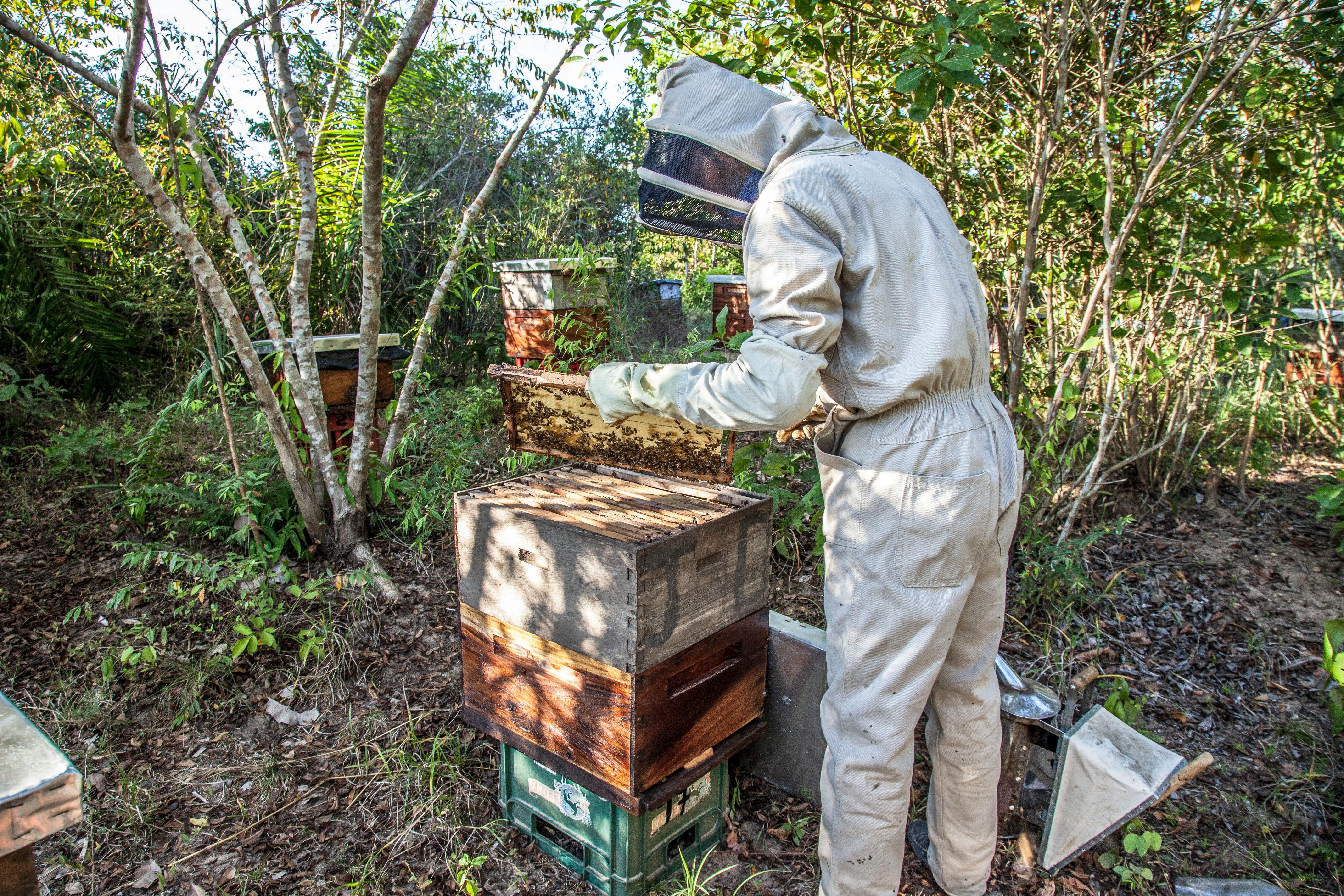
Embarking on your beekeeping journey is an exciting venture, and one of the very first crucial decisions you'll make is choosing the right type of beehive. The hive is your bees' home, their nursery, and their pantry. Different hive designs cater to various beekeeping philosophies, management styles, and goals. Let's explore three popular choices: the **Langstroth hive**, the **Warre hive**, and the **Top Bar hive**.
The Langstroth Hive: The Modern Standard
Invented by Rev. Lorenzo Langstroth in the mid-19th century, the Langstroth hive revolutionized beekeeping with its concept of "bee space" – a precise gap (typically 1/4 to 3/8 inch or 6-9mm) that bees will not fill with comb or propolis. This allows for movable frames, making hive inspections and honey harvesting significantly easier.
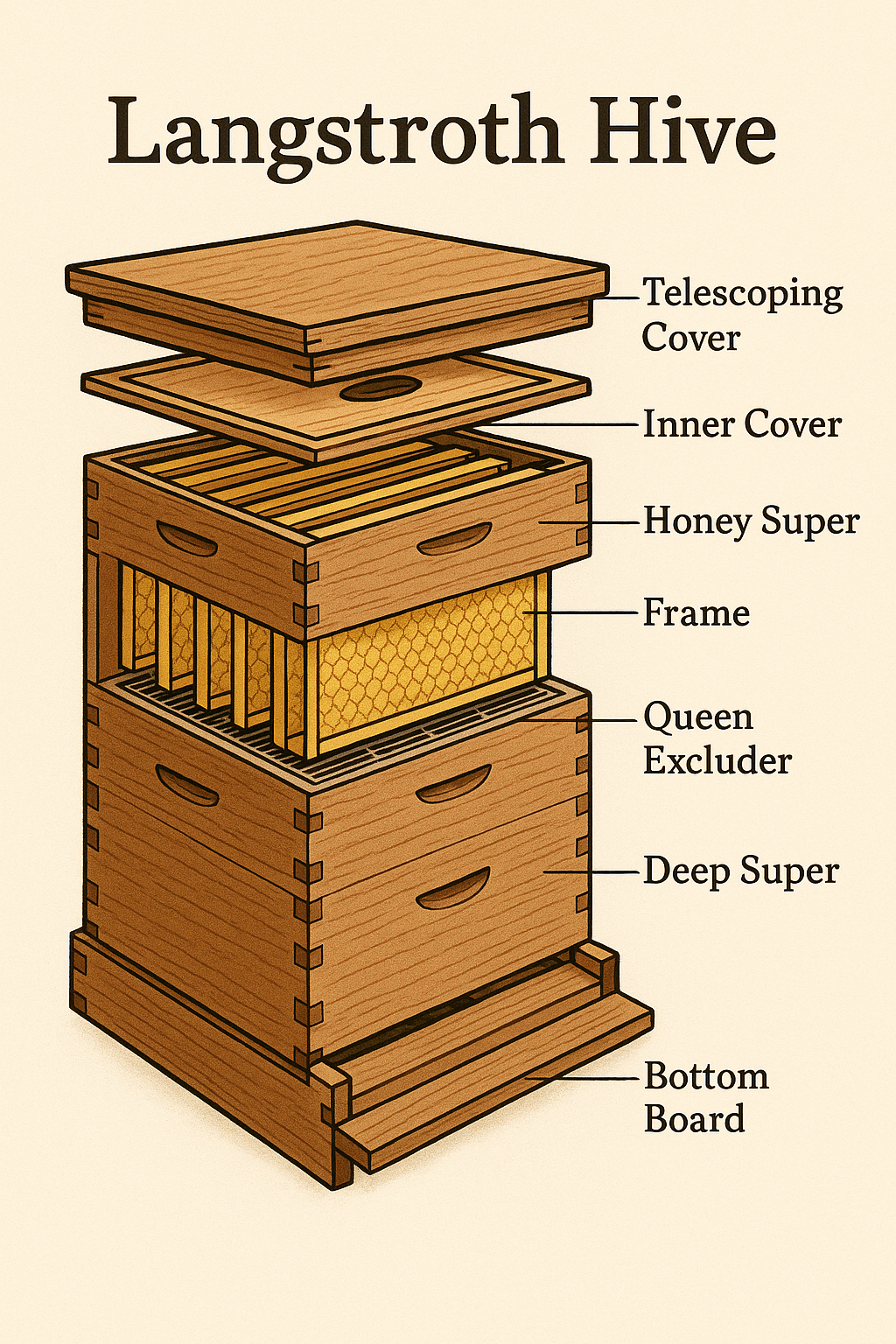
Components:
- Bottom Board: The floor of the hive, often with an entrance reducer.
- Hive Bodies/Brood Boxes: Deep boxes where the queen lays eggs and the colony raises brood. Usually one or two.
- Honey Supers: Shallower boxes placed above the brood boxes for honey storage.
- Frames with Foundation: Rectangular frames that hang inside the boxes. Beekeepers typically provide "foundation" (sheets of beeswax or plastic imprinted with a honeycomb pattern) to guide comb building.
- Inner Cover: Sits on top of the uppermost super, providing an air space and an upper entrance/ventilation.
- Outer Cover (Telescoping Lid): The roof, protecting the hive from weather.
Pros:
- Standardization: Most widely used hive type globally, meaning equipment and parts are readily available and often interchangeable between manufacturers.
- Ease of Inspection: Movable frames allow for thorough inspection of brood, queen health, and disease detection.
- Honey Harvest: Relatively easy to harvest honey, especially with an extractor, as frames are uniform.
- Scalability: Easy to add or remove supers to match colony size and honey flow.
- Resources: Abundant information, books, courses, and mentorship available for Langstroth beekeeping.
Cons:
- Heavy Lifting: Full honey supers can be very heavy (50-80 lbs or more).
- More Intrusive: Frequent full-frame inspections can be disruptive to the colony.
- Cost: Can be more expensive initially due to the number of components and the need for foundation.
- Beeswax Contamination: If using plastic foundation or old, dark combs, residues can build up.
Best for: Beekeepers who prioritize ease of management, conventional honey production, and access to a wide range of resources and equipment. It's often recommended for beginners due to the wealth of information available.
The Warre Hive: The "People's Hive"
Designed by Abbé Émil Warre in the early 20th century, the Warre (pronounced "war-RAY") hive is often called "The People's Hive." It aims to be more bee-centric, mimicking a natural tree hollow. It's a vertical hive where new boxes are added to the *bottom* (nadiring) rather than the top (supering).
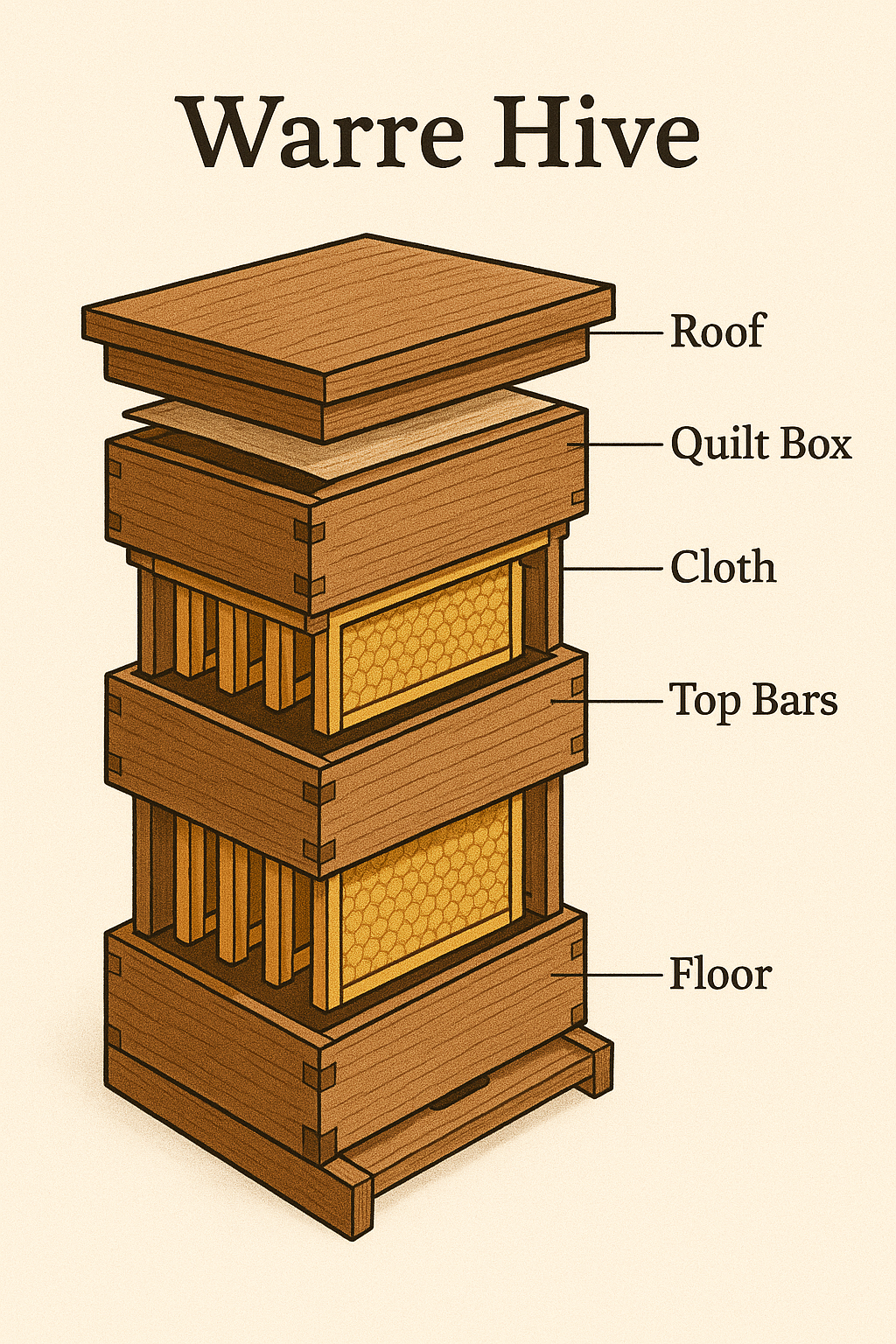
Components:
- Floor: Simple base.
- Hive Boxes: Smaller, square boxes (typically around 12x12 inches internally) stacked vertically.
- Top Bars: Instead of full frames, each box has 8-9 simple wooden bars across the top, from which bees build their natural comb downwards. No foundation is typically used.
- Quilt Box: An empty box at the top filled with insulating material (like wood shavings or straw) to absorb moisture and provide insulation.
- Roof: Gabled or flat, to protect from weather.
Pros:
- More Natural for Bees: Allows bees to build comb naturally downwards as they would in a tree cavity. Adding boxes at the bottom mimics this natural expansion.
- Less Intrusive Management: Generally requires fewer inspections. The focus is on colony health rather than maximizing honey yield through frequent manipulation.
- Better Wintering (Potentially): The quilt box helps manage moisture, and the vertical design can aid in heat retention.
- Natural Comb: No foundation means pure beeswax comb, which can be harvested along with the honey.
- Lighter Boxes: Individual boxes are smaller and lighter than Langstroth supers.
Cons:
- Honey Harvest: Can be more challenging. Typically involves crushing and straining the comb, as the comb is attached to the top bars and often to the sides of the box. Extractors are not usually used.
- Inspections: More difficult to inspect individual combs without breaking them, especially in the lower boxes. This can make disease detection harder for beginners.
- Less Standardized: Equipment might be less readily available or more expensive than Langstroth.
- Swarm Control: Can be trickier to manage swarm impulse if you're not inspecting as frequently.
Best for: Beekeepers interested in a more natural, less intensive approach, focused on bee welfare and potentially harvesting comb honey. It appeals to those who want to minimize interference with the colony.
The Top Bar Hive (TBH): Simplicity and Accessibility
The Top Bar Hive is one ofthe oldest and simplest hive designs. It consists of a single, long horizontal box with bars laid across the top. Bees build their comb downwards from these bars. There are two main types: the Kenyan Top Bar Hive (KTBH) with sloping sides and the Tanzanian Top Bar Hive with straight sides.
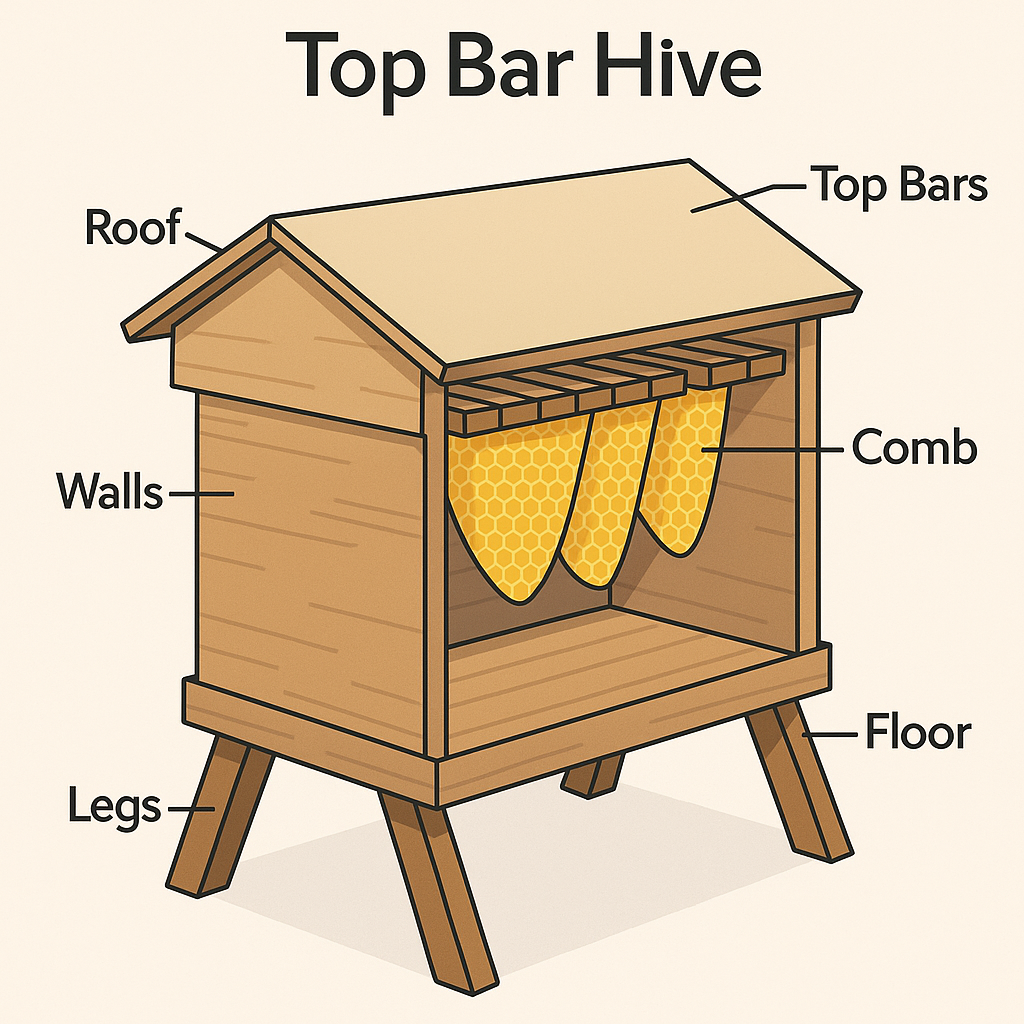
Components:
- Hive Body: A long trough-like box.
- Top Bars: Wooden bars that fit snugly across the top of the hive body. Bees build comb down from these. Often have a guide (wax strip or wooden V) to encourage straight comb.
- Follower Boards: Solid boards used to adjust the internal volume of the hive.
- Lid/Roof: Covers the top bars.
- Entrance: Usually a few small holes or a slot along one of the long sides.
Pros:
- Simple & Inexpensive to Build: Can be easily constructed from basic lumber, making it very affordable. Plans are widely available.
- Natural Comb: Bees build their own comb without foundation.
- Easy on the Back: No heavy boxes to lift. Inspections and harvesting are done one bar at a time.
- Less Intrusive Inspections: You only disturb the part of the hive you are inspecting.
- Good for Observation: Often includes an observation window.
Cons:
- Fragile Combs: Combs are only attached to the top bar and can break easily, especially when new or full of honey, requiring careful handling.
- Honey Harvest: Exclusively crush and strain, as combs are not typically suitable for extractors. This yields beeswax along with honey.
- Lower Honey Yields (Often): Compared to Langstroth hives managed for production.
- Wintering Challenges: The horizontal layout can make it harder for the cluster to move to honey stores in very cold climates compared to vertical hives. May require more careful winter preparation.
- Swarm Management: Requires diligent monitoring and management to prevent swarming.
Best for: Hobbyist beekeepers, those with physical limitations regarding heavy lifting, people interested in DIY hive building, and those who prioritize natural comb and a less intensive management style. It's popular in developing countries due to its low cost.
Which Hive is Right for You?
There's no single "best" hive type; the ideal choice depends on your personal beekeeping goals, philosophy, physical abilities, budget, and the amount of time you can dedicate.
- For Maximum Honey Production & Standardization: Langstroth is often the go-to.
- For a More "Natural" or Bee-Centric Approach with Less Lifting: Warre or Top Bar might appeal.
- For DIY Enthusiasm & Accessibility: Top Bar hives are a strong contender.
Consider visiting local beekeepers or a beekeeping club to see different hive types in action. Read books, watch videos, and talk to experienced keepers. Many beekeepers even end up trying more than one type of hive over their beekeeping journey!
Choosing your first hive is an exciting step. Whichever you choose, remember that successful beekeeping is more about understanding bee biology and behavior, and providing good stewardship, than the specific type of wooden box they live in. Happy beekeeping!