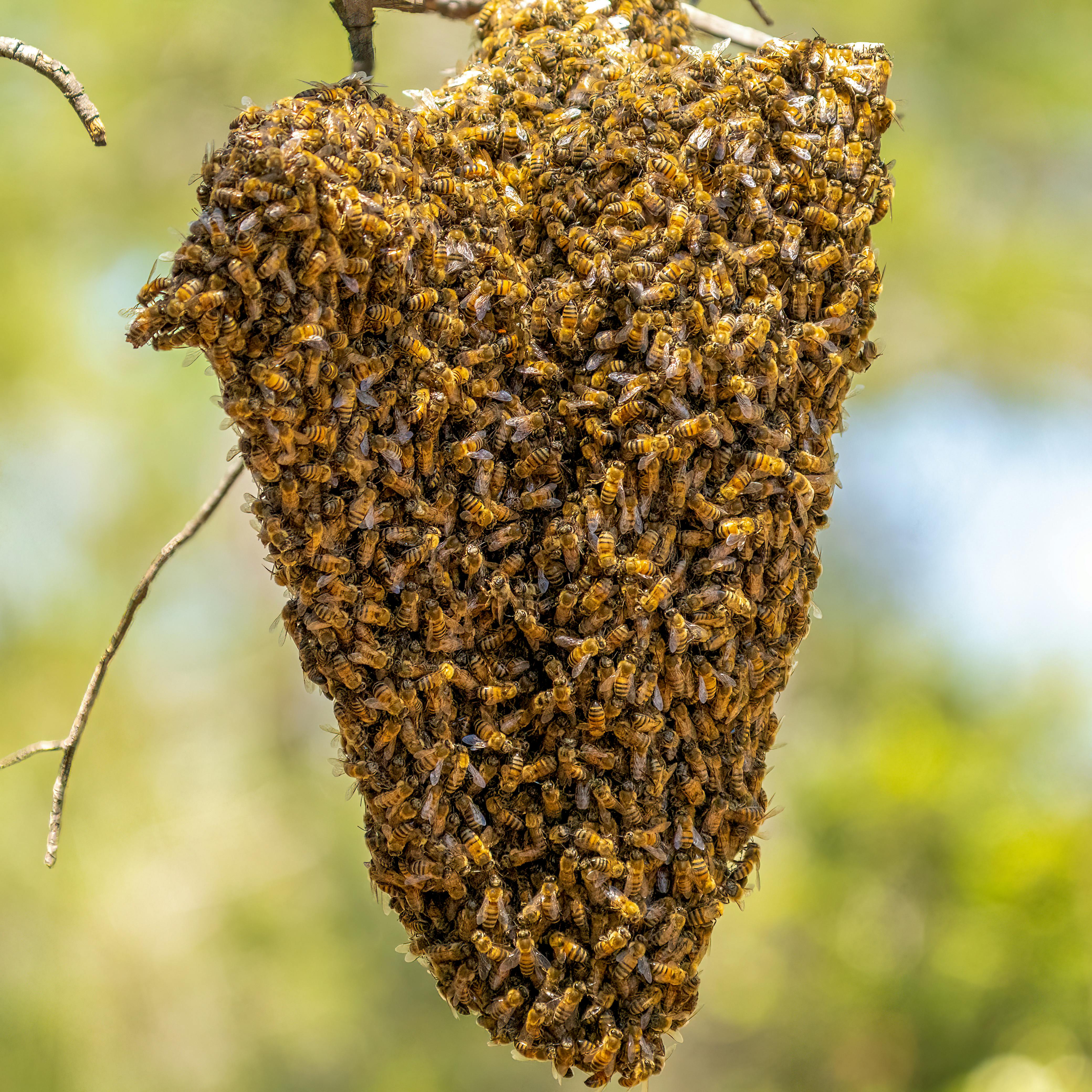
Encountering a swirling, buzzing cloud of thousands of honeybees, perhaps clustered on a tree branch or the side of a building, can be an unnerving sight for the uninitiated. However, this phenomenon, known as swarming, is a perfectly natural and vital part of a honeybee colony's reproductive cycle. Understanding why and how bees swarm can transform fear into fascination and help us appreciate these incredible pollinators even more.
What is Swarming and Why Do Bees Do It?
At its core, **swarming is how honeybee colonies reproduce and propagate their species.** It's not an act of aggression or a sign of a "bad" hive; rather, it's an indication of a strong, healthy colony that has outgrown its current living space or is preparing for a change in queenship.
The primary triggers for swarming include:
- Overcrowding: As a colony grows throughout spring and early summer, the hive can become congested with bees, brood (young bees), and stored honey/pollen. This lack of space signals to the bees that it's time to divide.
- Aging Queen: An older queen may lay fewer eggs or produce less queen mandibular pheromone (QMP), which helps maintain colony cohesion. The colony might decide to raise new queens and the old queen may leave with a swarm.
- Abundant Resources: A strong nectar flow can lead to rapid colony expansion and honey storage, quickly filling available space and encouraging swarming.
In preparation for swarming, the colony begins to raise several new queen cells. Just before these new virgin queens emerge, the old queen, along with roughly 30-70% of the worker bees (of all ages), will leave the hive. This departing group is the swarm.
The Journey of a Swarm
Before leaving, the swarming bees engorge themselves with honey from the parent hive. This honey serves as their fuel for the journey and provides the initial resources to build new comb once they find a permanent home. Because their bellies are full of honey, swarming bees are typically very **docile and unaggressive**. Their primary focus is on protecting their queen and finding a new nest site, not on stinging.
The swarm usually doesn't travel far initially. They will often settle in a temporary cluster on a nearby tree limb, fence post, or under an eave while scout bees fly out in search of a suitable new cavity. This search can take a few hours to a few days. The scout bees return and perform "dances" to communicate potential locations to the rest of the swarm. Eventually, a consensus is reached, and the entire swarm takes flight to its new home.
What Should You Do If You Find a Bee Swarm?
Seeing a swarm can be an amazing spectacle. Here’s how to react responsibly:
- Stay Calm and Observe from a Distance: Remember, swarming bees are usually gentle. Avoid sudden movements, loud noises, or swatting at them. Simply give them their space.
- Do NOT Spray Them: Never attempt to kill a swarm with water, pesticides, or any other harmful substances. Honeybees are crucial pollinators, and their populations face many threats. Swarms are a sign of bee vitality.
- Protect Pets and Children: While docile, it's wise to keep curious pets and children away from the immediate vicinity of the swarm to avoid accidental agitation.
- Contact a Local Beekeeper or Beekeeping Association: This is the most important step! Many beekeepers are eager to collect and rehome swarms, as it's a free and natural way to start a new colony. They have the proper equipment and knowledge to do so safely.
- Search online for "[Your Town/County] Beekeepers Association" or "local swarm removal."
- Your local extension office or even fire department (non-emergency line) might have a list of beekeepers who collect swarms.
- Provide Information: When you call a beekeeper, be ready to provide details:
- The location of the swarm (address, specific spot like "in the apple tree, 10 feet up").
- How long it has been there (approximately).
- The approximate size of the swarm (e.g., "size of a basketball," "size of a football").
- Your contact information.
If a swarm has taken up residence inside a wall or structure, removal becomes more complex and may require a specialized beekeeper experienced in "cut-outs."
Swarm Prevention for Beekeepers
For beekeepers, while swarming is natural, it often means a loss of a significant portion of your workforce and potential honey crop. Preventative measures include:
- Regular Inspections: Monitor for signs of overcrowding and the presence of queen cells (swarm cells are typically found along the bottom of frames).
- Provide Ample Space: Add new supers (boxes) ahead of the colony's needs, especially during strong nectar flows.
- Splitting the Colony (Artificial Swarm): If a hive is very strong and showing signs of swarm preparation, a beekeeper can divide the colony to create two smaller, manageable ones.
- Queen Management: Replacing older queens can sometimes reduce swarm impulse.
Swarming is a testament to the resilience and natural instincts of honeybees. By understanding this process, we can better appreciate these vital creatures and ensure that when we encounter a swarm, we can help them find a safe new home, often with the assistance of a local beekeeper. It’s nature’s beautiful way of ensuring the continuation of these essential pollinators.